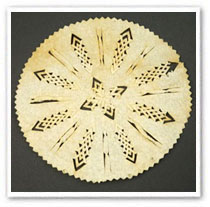
 By now we’re sure you know all about Iceland’s waterfalls and elves and Christmas trolls, but we’re about to drop some new knowledge on you about the most unique Icelandic Christmas tradition of all: the making of laufabraud, or “leafbread.”
Leafbread is the name for thin, round cakes made from flour and served at Christmastime. For centuries families in Iceland have gathered a few weeks before Christmas to carve decorative patterns into these cakes, especially in north Iceland where the tradition originates. The cakes are then fried in melted sheep fat and served with hangikjöt, smoked lamb, on Christmas Day. While decorated bread is also a tradition in other countries, leaf-thin deep-fried cakes with patterns created by making cuts through the dough only happens in Iceland.
The cakes are thin because flour was sparse in early Iceland, and the pattern was meant to make up for the small amount of food the bread actually constituted. Traditionally, the triangular cuts are made with a pocketknife and are known as leaves—hence the name “leafbread.”
Designer and decorator Hugrún Ívarsdóttir has created a holiday exhibit of leafbread at Amtsbókasafnid Library in Akureyri, the capital of the north. The exhibit runs through January 6. (http://www.akureyri.is/amtsbokasafn/english/)