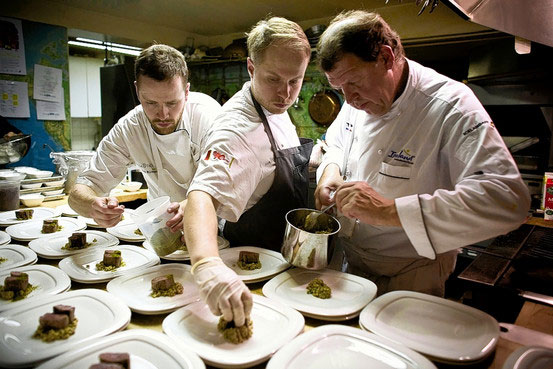
“Can you give this young man a spoonful of mussel ice cream?” Mr. (Siggi) Hall asked.
The young man gave an expression that suggested he wasn’t interested. “Don’t be afraid,” Mr. Hall said. “We serve it with arctic char, but it tastes just as good alone.”
Does Björk eat it? “Yes of course,” Mr. Hall said. “She loves it. It is her favorite. She’s a mussel ice cream fanatic.”
Someone brought over a big tray of the frozen, mussel-colored concoction and dug a spoon into it. It’s a bit of a blur, but somehow the spoon ended up in the reporter’s mouth, and, well, it was surprisingly tasty. Mr. Hall was pleased.
“You should come to Iceland where you can be my honorary guest,” he said.
“You will always be eating Icelandic butter on Icelandic bread and mussels ice cream.”
– Marshall Heyman, The Wall Street Journal, Nov. 2. Read the whole article here.
“Climbing the highest peak in Iceland is the ultimate fitness adventure. Burn 550 calories per hour as you reach for the top in this winter workout.”
– Stefani Jackenthal, Oxygen Magazine, December 2010
“The 10 million people stranded by ash from Eyjafjallajokull last spring may still be cursing the volcano’s name, if they can pronounce it. But in Iceland, Eyjafjallajokull is being hailed as the volcano that is raising tourism to new heights.”
– Christine Negroni, New York Times, Oct. 3 http://intransit.blogs.nytimes.com/2010/09/22/after-the-volcanic-cloud-a-bright-spot-in-iceland/
“What to do: Iceland is a treat for the eye, from its springy green turf to its brilliant blue sky and black volcanic rock. There are a few reminders around of the eruption of the Eyjafjallajökull volcano earlier this year—T-shirts bearing the slogan “We may not have cash, but we’ve got ash!”
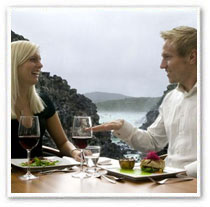 Where to Eat: Iceland has some of the most inventive food among the Nordic countries and boasts some of the freshest fish anywhere. The newest and most acclaimed restaurant in Reykjavik is Dill, located in the Nordic House, a short walk from the city center. Chef Gunnar Karl Gislason and his team get their fish, herbs and vegetables entirely from Icelandic sources.”
– Paul Glader, The Wall Street Journal, Nov. 18. Read the whole article here.
“Just like in Donald Rumsfeld’s world, there are known unknowns and unknown unknowns when looking to view the aurora borealis in Iceland. Here are some of the known knowns: optimal viewing time is between September and March; cold, crisp, clear nights are the best; and it’s also nice if the weather is calm, as you’ll want to stand outside and gaze. In Iceland it only takes 20 minutes to drive from the capital to a place to see the northern lights. In other countries you need to go to more remote areas.
“Many people head to Thingvellir national park. There’s no hotel there but it’s close to Reykjavík: you can leave after dinner and be back before midnight. Head to Almannagjá, the spot in the park where they founded the parliament over 1,000 years ago. It’s a small canyon with huge cliffs and nothing to block your view of the lights.”
– Leon Golub, The Guardian, Nov. 13. Read the whole article here.
“In this otherworldly landscape, daylight is a four-hour affair and the liquid-green aurora borealis illuminates the nighttime sky. The ubiquitous statues of the 12 Yule Lads (the Icelandic version of Santa Claus) peer out from every corner shop and kitchen window. For covetable views of the Hallgrímskirkja cathedral, check in to the Hótel Leifur Eiríksson. A five-minute walk away, you’ll find the Hand Knitting Association of Iceland, whose mittens, made with native wool, are ideal stocking stuffers.”
– Jennifer Coogan, Travel+Leisure, November, 2010. Read the whole article here.
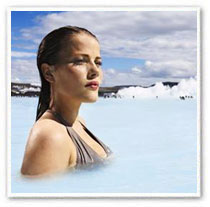 Take advantage of the great exchange rate and hop on up to the top of the world in 2011. It’s an ideal time to experience all Iceland has to offer. For a short time the Build Your Own offer will include a free northern lights tour on your first night in Iceland. Enjoy shopping for quality Icelandic products, delicious gourmet Icelandic cuisine, invigorating outdoor adventure, legendary nightlife, highland wilderness beauty, soothing spas and more.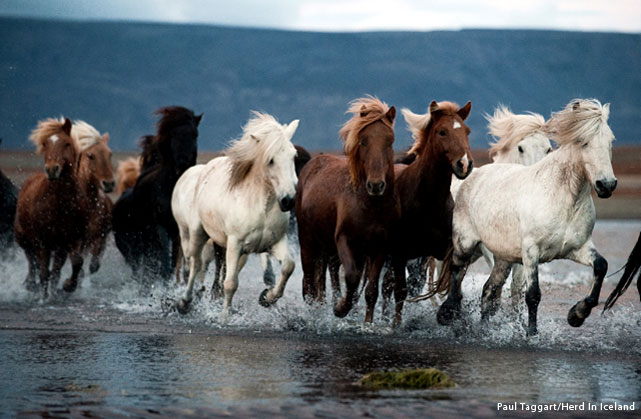
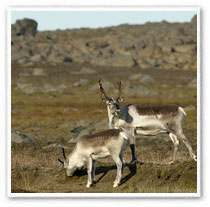 It is now possible to monitor the movements of Santa’s reindeer on the website of the East Iceland Nature Center (NA). GPS monitors have been placed on 12 females for research purposes, which transmit their location on a daily basis.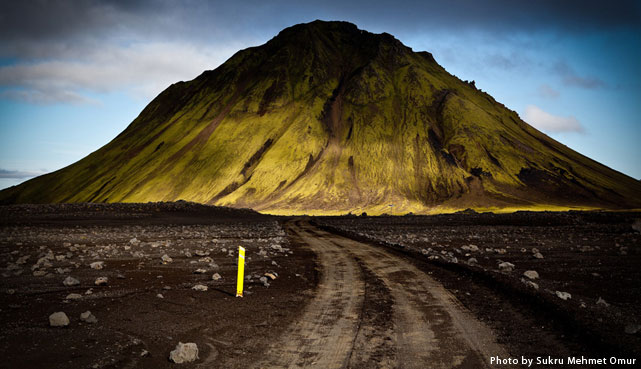
 The well-respected Travel+Leisure magazine asked their writers for their top holiday travel picks in their November issue and Iceland was recognized, twice, as a best bet.
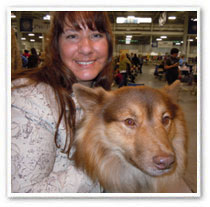 Imagine our delight last month when we got to visit with Ch. Isi Kaffisukkolathi, the number two Icelandic sheepdog in the U.S. “Kaffi,” as he’s known to friends, was competing in The National Dog Show, Presented by Purina” – you may have seen him on NBC during the broadcast after the Macy’s Thanksgiving Day parade, which was hosted by The Kennel Club of Philadelphia. The Icelandic sheepdog, competing at the National Dog Show for the first time, is thought to be one of the oldest breeds of dogs in the world dating back to 800 AD. Kaffi is the first male Icelandic sheepdog to earn an AKC Championship.
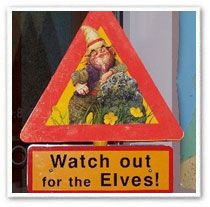 The Will Ferrell comedy film, Elf, was a big hit a few years ago. Now there’s a Broadway musical making theatergoers laugh. But for the country of Iceland, elves are no laughing matter.
 Travelzoo Inc., a global Internet media company, announced five destinations its deal experts predict will offer the best travel value in 2011. The “Wow Deal Destinations” are: Mexico (Yucatan Peninsula focus), Iceland, Bermuda, Las Vegas, and California’s Central Coast.
 CNNGo.com just released their list of the “Top 10 places to spend your 2010 Christmas.” The competition was fierce: also listed is Boston, San Juan, Hong Kong, even New York. But the number one place to visit for the holidays? You guessed it. Writer Tiffany Lam praises the Christmas Village at Hafnarfjördur, a town not far from Reykjavik that is known in Icelandic lore as the home of elves. The Christmas Village is open every weekend from now until Christmas day. Hafnarfjördur also offers walking tours to supposed elf homesites (see related story below).