|
|
|
|
|
 |
  |
|
|
Mon Jul 09 2007, 02:34PM
United Nations Names ICELAND the Best Country to Live In
Iceland is the world’s best place to live according to an annual UN report published on Tuesday November 27, 2007. The index takes into consideration figures on life expectancy, education levels, and real per capita income to rank 175 nations of the world.
Norway held the top ranking for the past six years but was edged into second place by the small island nation due to new life expectancy estimates and updated figures on gross domestic product (GDP). The United States ranked 12th, slipping from 8th place last year. The United Nations has published its human development index every year since 1990. Click here to view the report. (http://hdr.undp.org/en/statistics/).
Enjoy the Fruits of Our Labor!
Long life expectancy and high education levels come as a result of various environmental and social factors. Whether it is the pollution-free air & water, organic food products, or cultural innovations, there are numerous ways for travelers to experience the Best Place on Earth.
Spa Central
Although it may seem ironic, the most popular sport in Iceland is swimming in outdoor heated pools - in any weather! Research has shown that swimming and bathing outdoors in hot, thermal water, while breathing in clean, fresh air has a positive effect on the heart and respiratory system. No wonder Icelanders live so long.
One of the most unusual sites in Iceland is a bathing area known as the Blue Lagoon. It is geothermally heated, with smoky blue waters that are beneficial for the skin. The waters of the Blue Lagoon also help to cure certain skin diseases such as psoriasis.
The Capital of Clean
The capital city of Reykjavik, with its 200,000 inhabitants is probably one of the cleanest and safest cities in the world. Its plentiful resources of geothermal energy ensure clean air and unpolluted water giving both citizens and visitors a unique sense of liveliness and contentment. Walking the streets of Reykjavik can be a very peaceful experience given that external annoyances such as traffic jams and noise pollution are at a bare minimum.
Food for Thought
Dining in Iceland is a culinary celebration of fresh ingredients and cultural variety. Chefs have the advantage of cooking with pure and natural Icelandic ingredients. Inexpensive geothermal energy provides the resources to grow all sorts of organic fruits and vegetables in greenhouses. Meat and dairy products are free of additives and growth hormones. Seafood is caught fresh daily from the glistening, pollution free waters of Iceland. Very often the mouth-watering halibut swimming in a delectable sauce on your dinner plate was carelessly swimming in the ocean during breakfast.
A pollution-free environment provides Iceland with some of the best tasting tap water on Earth; even the rivers and streams are 100% safe to drink from.
Clean Energy
As a nation Icelanders are in a unique position, because 72% of all energy used is renewable, clean and relatively inexpensive. This is the highest utilization rate found in the world. In the EC, this ratio is 7%, and globally 13% of the used energy is renewable.
Culture is in Our Nature
Icelanders are well educated with most schooling at little or no cost to its citizens, leaving plenty of room for artistic as well as scholarly pursuits. Travelers can enjoy a packed program of cultural delights from art museums, theaters, an opera house, a symphony orchestra and live music concerts.
Speak for Yourself
English is taught in school from the age of 12, and almost all Icelanders speak it fluently. Just stop an Icelander and say, “Hello,” – as we are known for our warm, welcoming natures and for a desire to share our culture.
Icelandic is the oldest living language in Europe. Modern Icelanders are still able to read the 1000-year-old sagas written by the Vikings, which are available for viewing at the Culture House in Reykjavik.
Art & Soul
In Iceland there are more artists per capita than anywhere else in the world. Considering that Iceland has only 300,000 people, the number of museums and art galleries in the country is astounding. Even in the small towns and out-of-the-way fishing villages, you will encounter some public place dedicated to preserving the national heritage or displaying the local artists. The largest museums and galleries are, of course, in Reykjavik. Among the most visited are the Culture House, Einar Jonsson Museum, and the National Gallery. Though these are the major culture venues, art enthusiasts can find a museum or gallery to quench almost any interest.
By the Book
Iceland has one Nobel laureate, Haldor Laxness, who won the Nobel Prize for Literature in 1955 with his novel, Independent People. Most of his works have been translated into English and are available in bookstores throughout the country.
Iceland has one of the highest literacy rates in the world, 100%. In fact, more books are published per capita than in any other country.
|
|
|
|
|
|
 |
|
 |
|
|
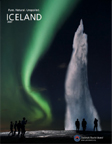 Order
Order your brochure or download it, and you could be on your way to wonderful Iceland.
|
|