Pastland | 930 A.D.-
1030 A.D.
  Modern day
Icelanders often point to the first Norse settlers as their ancestors, often speaking
fondly of their colorful Viking past. Much of it is writen down in the Landnamabok (Book
of Settlements), one of the early sagas. While there is some argument as to the motives of
the first widespread Nordic settlement, convention holds that the Norsemen were fleeing
the tyranny of the Norwegian King Harald Haarfagri, who drove them from their ancestral
lands in southern Norway. Arriving in Iceland, they threw high seats over the edges of
their longboats and built their new homesteads where the seats washed ashore, believing
that the divine hand of Thor would choose the spot. Sometimes it would take years before
the seats were found. Modern day
Icelanders often point to the first Norse settlers as their ancestors, often speaking
fondly of their colorful Viking past. Much of it is writen down in the Landnamabok (Book
of Settlements), one of the early sagas. While there is some argument as to the motives of
the first widespread Nordic settlement, convention holds that the Norsemen were fleeing
the tyranny of the Norwegian King Harald Haarfagri, who drove them from their ancestral
lands in southern Norway. Arriving in Iceland, they threw high seats over the edges of
their longboats and built their new homesteads where the seats washed ashore, believing
that the divine hand of Thor would choose the spot. Sometimes it would take years before
the seats were found.
The exiled Norse quickly developed their own sense of national identity,
creating in 930 what is regarded as the world’s first parliamentary system, The
Althing. Local chieftans gathered at Thingvellir, a
natural amphitheater, where they elected leaders yearly. To prevent leaders from abusing
power, The Althing had no military to enforce its will, a stipulation that would later
cause problems when regional chiefs decided to take matters into their own hands.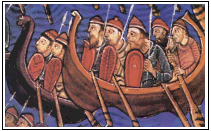 But for the most part, these early years following the development of the Althing were
peaceful. It was an era of optimism, even for Erik the Red, who arrived after he
was banished from Norway for murder. When he committed the same crime in Iceland and was
exiled from there, too, he managed to convince 25 ships to follow him in a colonial
expedition to Greenland. His son, Iceland born Leif Eiriksson, later sailed further
west, becoming the first European to reach North America, which he called Vinland.
But for the most part, these early years following the development of the Althing were
peaceful. It was an era of optimism, even for Erik the Red, who arrived after he
was banished from Norway for murder. When he committed the same crime in Iceland and was
exiled from there, too, he managed to convince 25 ships to follow him in a colonial
expedition to Greenland. His son, Iceland born Leif Eiriksson, later sailed further
west, becoming the first European to reach North America, which he called Vinland.
 Viking Oasis
- Europe's Hard Shadow - Independence
Viking Oasis
- Europe's Hard Shadow - Independence |