
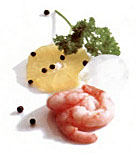
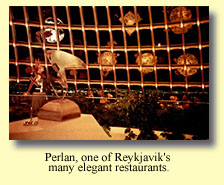
Cuisine: Because of the unpolluted landscape, the food in Iceland is among the freshest, most healthy in the world. Vegetables are grown in the most organic of soils, and the seafood - always fresh from the morning catch - is astonishingly delicious. Among the more renown dishes are Iceland lamb, which has a slightly gamey taste, and skyr, a yogurt-like desert. There is, of course, no shortage of international cuisine in Iceland. Reykjavik has over 200 restaurants, and the dining scene is quite sophisticated.
|
 The
first thing you should know about Iceland is that it is nowhere near as
cold as its name implies. The average January day in Reykjavik
is about the same temperature as it is in New York City. This means that
a winter trip is just as viable as a summer visit, and the costs are much
lower. Why the old Norsemen who first came here gave such an icy name to
a such a green country is a mystery, but there is an old legend: the first
Viking to discover the island wanted to keep it all to himself, so he named
the green country “Iceland” and the icy country “Greenland,” hoping that
future settlers would head further north. The
first thing you should know about Iceland is that it is nowhere near as
cold as its name implies. The average January day in Reykjavik
is about the same temperature as it is in New York City. This means that
a winter trip is just as viable as a summer visit, and the costs are much
lower. Why the old Norsemen who first came here gave such an icy name to
a such a green country is a mystery, but there is an old legend: the first
Viking to discover the island wanted to keep it all to himself, so he named
the green country “Iceland” and the icy country “Greenland,” hoping that
future settlers would head further north.
Obviously, his plan didn’t quite work out, but even today Iceland is
still one of the least populated nations on Earth. The electric green landscape
is full of wide open spaces and geological wonders:
intricately carved mountains, belching mud pools, steaming hot springs,
blinding glaciers, heavenly waterfalls and hellish volcanoes. And because
of the island’s endless supply of geothermal energy, pollution is nonexistent.
|
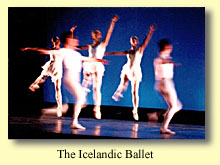
 Many people have
heard of Iceland’s natural beauty, but one of the island’s best kept secrets
is its thriving cultural life. Reykjavik has become one of Europe’s hottest
nightspots, and the art scene is alive an well. Testifying to the cultural
health is an explosion of cafes - that oh so cultural symbol - in downtown
Reykjavik. Day or night, winter or summer, they are brimming with both
brew and people - 99 percent of whom speak English.
Many people have
heard of Iceland’s natural beauty, but one of the island’s best kept secrets
is its thriving cultural life. Reykjavik has become one of Europe’s hottest
nightspots, and the art scene is alive an well. Testifying to the cultural
health is an explosion of cafes - that oh so cultural symbol - in downtown
Reykjavik. Day or night, winter or summer, they are brimming with both
brew and people - 99 percent of whom speak English.